
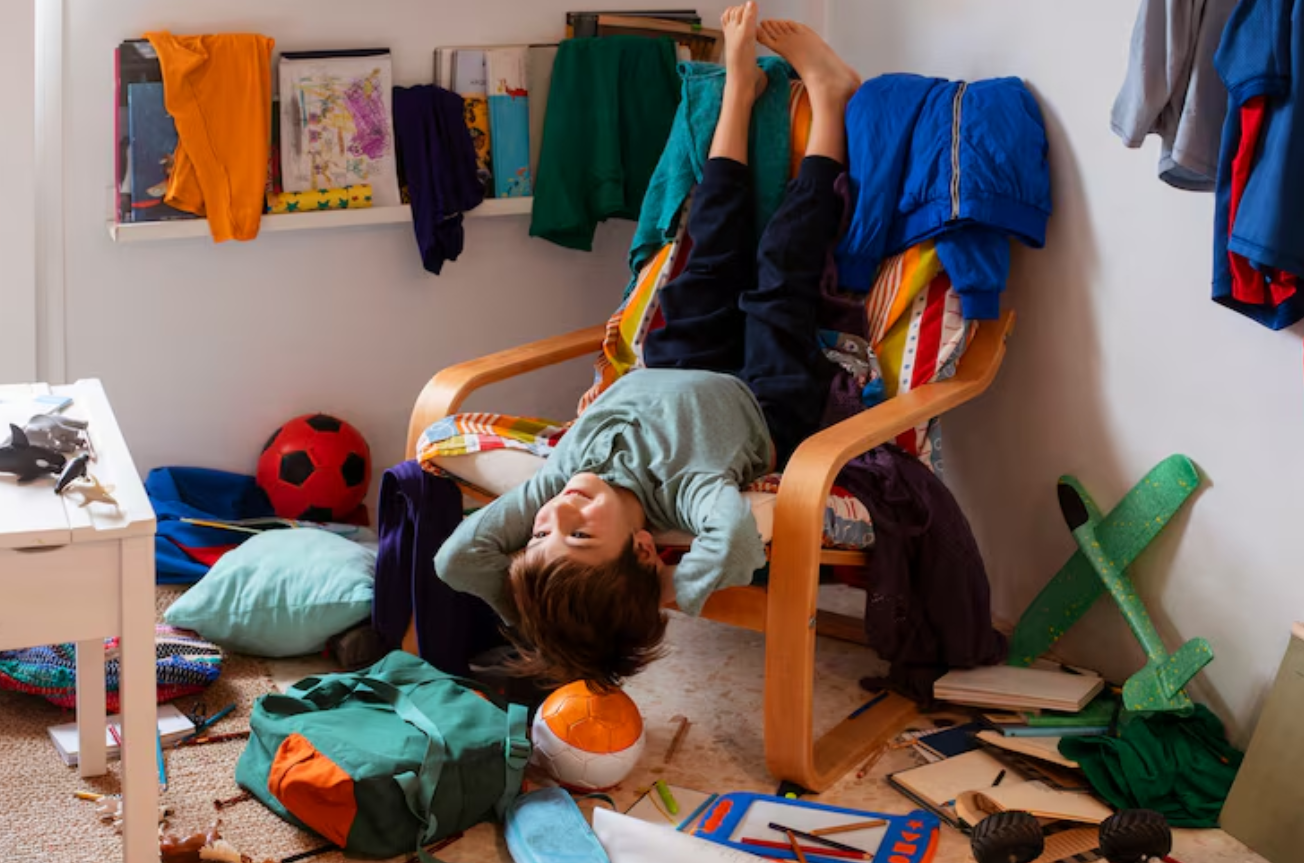
Does cleaning up toys at home feel like a daily battlefield?
Do you often find yourself yelling, “Where’s your shoe?” or “Who left this mess?” only to end up cleaning everything yourself?
You’re not alone. Many parents feel overwhelmed by the endless clutter of toys, books, and random bits of “treasure” that seem to appear out of nowhere. But behind this everyday frustration lies something more meaningful — a chance to teach responsibility, organization, and emotional self-regulation.
These small, chaotic moments at home are not just about tidiness. They reveal how children develop executive function skills, learn to manage rules, and build emotional resilience — all key parts of healthy growth.
When Playtime Turns into Panic Time
Imagine this: You’re about to leave the house, but your child can’t find their favorite toy. Suddenly, everyone is turning the house upside down, pulling out boxes, and digging under the couch — a full-blown family “treasure hunt.”
In play therapy, scenes like this happen all the time. When children have only a few minutes left in a session and haven’t cleaned up, the floor often looks like the aftermath of a storm.
It always makes me wonder:
If this is what the playroom looks like in 50 minutes, what does the living room at home look like after a weekend?
The Psychology Behind Tidying Up
Tidying up toys is about much more than keeping the floor clear. It helps children build:
- Executive Function: The ability to plan, focus, and manage tasks.
- Emotional Regulation: Managing frustration when asked to stop playing.
- Sense of Ownership: Valuing and caring for personal belongings.
Research in developmental psychology shows that when children learn to organize their environment, they also gain a sense of control and confidence, which contributes to emotional resilience later in life.
Different Families, Different Rules — and Different Emotions
Once children are old enough to put toys away, families often create their own “toy-cleaning systems.”
Here are some common examples:
- One-at-a-time rule: Only one toy type can be played with at a time; clean it up before switching.
- Lost means gone rule: Any toys left out risk being “thrown away” or “donated.”
- Big box solution: Everything gets tossed into one big bin — quick and simple.
Behind these methods are different parental attitudes.
Some parents believe rules and structure build discipline. Others think simplicity reduces stress, especially if they’ll end up doing most of the cleaning anyway.
There’s no single right answer — what matters is how parents communicate those rules and what emotional message children receive.

Why Children Resist Cleaning Up
When kids refuse to tidy up, it’s rarely because they’re “lazy” or “defiant.”
Instead, the reasons are often:
- Overstimulation: The room feels overwhelming; they don’t know where to start.
- Lack of structure: They haven’t learned a clear, step-by-step process.
- Emotional attachment: Each toy represents creativity or comfort — letting go feels hard.
- Parental tone: If cleaning becomes a battle of power, children react defensively instead of cooperatively.
Understanding this helps parents shift from commanding to coaching — guiding children to act from inner motivation rather than fear of punishment.

Practical Ways to Help Kids Tidy Up
1. Model the Behavior
Children also learn more from what they see than from what they’re told. If they observe you calmly organizing your space, folding clothes, or cleaning up after yourself, they’re more likely to imitate that behavior. Modeling tidiness shows that it’s simply a part of daily life, not a punishment or a task to avoid.
2. Start Small and Simple
When it comes to helping children develop tidying habits, it’s important to start small and simple. Expecting a perfectly clean room right away can easily lead to frustration for both parent and child. Instead, begin with something achievable, such as saying, “Let’s start by putting away just five toys together.” Small, manageable goals help children experience success early on, which in turn builds their confidence and motivation to continue.
3. Reframe the Motivation
Equally important is how you frame the motivation behind cleaning. Instead of using threats like “If you don’t clean up, I’ll throw it away,” try focusing on positive outcomes: “When everything’s in the right box, you’ll find your favorite toy faster next time.” This shift in language encourages intrinsic motivation—helping children act out of self-understanding and internal satisfaction rather than fear of consequences.
4. Turn It into Play
Another effective approach is to turn cleaning up into play. Children naturally respond to fun and creativity, so make tidying an engaging activity rather than a chore. You could play music, set a timer, or turn it into a lighthearted competition: “Let’s see who can find all the red blocks first!” By combining play and learning, you stimulate both the emotional and logical parts of the brain, making the process enjoyable and memorable.
5. Check Your Own Emotions
Finally, remember to check your own emotions. Sometimes, the real “mess” is emotional rather than physical. If your child’s slow pace or resistance makes you frustrated, take a deep breath before reacting. Children are quick to sense tension, and how you handle those moments teaches them valuable lessons about emotional regulation. When you stay calm and composed, you show them that order can be restored not only to a messy room—but also to a stressful moment.
From Control to Connection
As children grow, the goal isn’t just to have a tidy room — it’s to raise a child who feels respected, responsible, and capable.
When parents shift from “controlling” to guiding, something magical happens:
Children stop resisting, and start responding.
The moment you stop using authority to demand respect and instead offer understanding, you’ll notice a change — not just in behavior, but in your relationship.
The Real Goal Behind a Clean Room
A spotless floor is nice, but it’s not the real goal.
What truly matters is helping your child learn how to find order in chaos, how to value what they own, and how to take responsibility without fear.
The next time you trip over a Lego or step on a toy car, take a moment to smile — because these little “battles” are really lessons in emotional growth.