
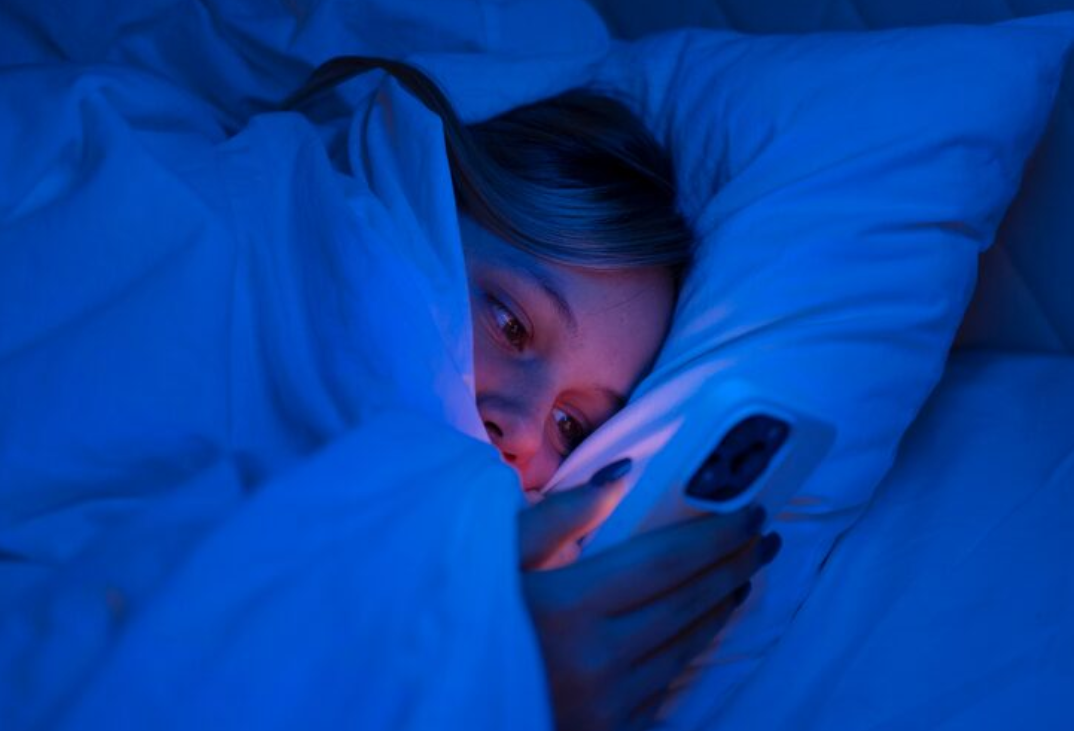
Most people end their day the same way: one last look at the phone, then placing it on the nightstand or even under the pillow while it charges. This routine feels harmless, but it can quietly chip away at sleep quality and may contribute to long‑term health concerns. The main issues are not only blue light from the screen, which interferes with the body’s internal clock, but also the radiofrequency (RF) signals that phones use to communicate with nearby towers. While current evidence does not prove that normal phone use is dangerous, several health agencies recommend simple precautionary steps, especially at night when the brain and body are trying to recover.
Radiofrequency signals: what is actually known
Mobile phones emit non‑ionizing RF electromagnetic fields, the type of energy used for wireless communication. Unlike ionizing radiation (such as X‑rays), RF energy does not have enough strength to directly damage DNA. Large reviews of the evidence so far have not confirmed that everyday mobile phone use causes cancer, but they also cannot completely exclude a small long‑term risk, especially with heavy use over many years.

In 2011, the World Health Organization’s International Agency for Research on Cancer (IARC) classified RF electromagnetic fields as “Group 2B – possibly carcinogenic to humans.” This category means there is limited evidence of a possible link in humans and limited or inadequate evidence in animals, so the risk is uncertain but warrants ongoing research and prudent use. Because of this uncertainty, some public health agencies advise people to reduce unnecessary exposure where it is easy to do so, for example by avoiding keeping a phone pressed directly against the head or body for long periods during calls or sleep. It is also true that phones can increase their transmission power when the signal is weak, although power output still remains within regulatory limits.
Blue light and sleep disruption
The effects of screens on sleep are better established than the long‑term RF risks. Phone screens and other LED devices emit short‑wavelength blue light, which can suppress or delay the release of melatonin, the hormone that helps signal to the brain that it is time to sleep. Using a smartphone close to the face in the hour or two before bedtime can make it harder to fall asleep, shift the timing of the body clock, and reduce both total sleep time and the proportion of deep and REM sleep. Over time, poorer sleep quality is associated with problems such as reduced attention, mood changes, and weakened immune function.

Blue‑light–filter modes, warmer colour settings, and lowering brightness can lessen—not eliminate—these effects. The most effective step remains limiting screen use close to bedtime, especially for activities that are mentally stimulating or emotionally activating.
Distance and “safe use” at night
There is no officially established “1.5‑metre rule” that has been validated by large health studies. However, the basic physics of RF fields mean that signal strength drops quickly with distance. Public health guidance in some regions, such as from the California Department of Public Health, suggests practical measures like keeping the phone a bit away from the body (for example on a bedside table rather than under the pillow), using speakerphone or a wired headset during long calls, and avoiding carrying the phone directly against the body when it is actively transmitting.

For sleep, a sensible approach is to keep the phone at arm’s length or on a nearby surface rather than right next to the head, especially if it is connected to mobile data or Wi‑Fi all night. This is a precautionary measure rather than a response to proven harm. It also has a behavioural benefit: increased distance makes it less tempting to scroll in bed, which indirectly improves sleep.
Practical steps for a healthier sleep environment
Transforming the bedroom into a better recovery zone does not require fear of technology, just thoughtful habits:
Use airplane mode at night if the phone must stay in the room.
Turning on airplane mode disables cellular, Wi‑Fi and Bluetooth transmissions, greatly reducing RF emissions while still allowing alarm functions and offline apps to work.
Prefer a separate alarm clock when possible.
Using a simple battery‑powered alarm allows you to leave the phone outside the bedroom or farther from the bed, which removes both the light exposure from late scrolling and notifications that can disturb sleep.

Never charge the phone under a pillow or bedding.
Covering a charging phone can trap heat from the battery and charger, increasing the risk of overheating or, in rare cases, fire. Charging on a hard, uncovered surface away from flammable materials is much safer.
Reduce screen impact before bed.
If you need to use your phone in the evening, enable the strongest blue‑light‑reduction feature available (such as “Night Shift,”“Eye Comfort Shield,” or similar), shift the screen to a warmer tone, and turn the brightness down. Aim to stop intensive use at least 30–60 minutes before trying to sleep.
Reclaiming the bedroom for rest
Modern smartphones are powerful tools that also bring hidden costs when they follow us into bed. Current scientific evidence does not justify panic about RF exposure from normal use, but it does support reasonable precautions and a strong link between screen habits, blue light, and disrupted sleep. By keeping the phone a little farther away, using airplane mode at night, avoiding under‑pillow charging, and creating a wind‑down routine with less screen time, the bedroom can return to being a space for deep, restorative sleep. These small adjustments help protect both physical health and mental clarity in the long run, without requiring anyone to abandon technology altogether.